
July 2026
Dear SWP Client,
In our second quarter letter, three themes stand out as especially relevant: inflation and Federal Reserve policy, the interaction of tariffs, energy prices, and geopolitical risk, and recent changes to retirement and education-planning rules.
1. Tariffs, energy prices, and geopolitical risk
Trade policy and geopolitics have re-emerged as important drivers of both inflation and market sentiment. The past year has seen renewed discussion of tariffs on a range of imported goods, as well as ongoing tensions in key shipping routes and energy-producing regions.bea+1 Tariffs, when implemented, effectively act as taxes on imported products and can raise input costs for businesses and consumer prices for households. Geopolitical events that disrupt energy production or transportation can have similar ripple effects by pushing up oil and gas prices. For investors, these developments tend to show up in sector-level performance, corporate earnings guidance, and measures of market volatility. It is important to remember that markets generally attempt to price in these risks ahead of time, and headlines that feel new can be part of a longer-running adjustment process. From a planning perspective, the key is not to react to each policy announcement, but to ensure that portfolios are diversified across sectors, regions, and asset classes, and that near-term spending needs are not overly dependent on any single source of return. Families with closely held businesses that are sensitive to tariffs or energy costs may also wish to revisit contingency plans, pricing strategies, and capital expenditure timelines.
2. Inflation and Federal Reserve policy
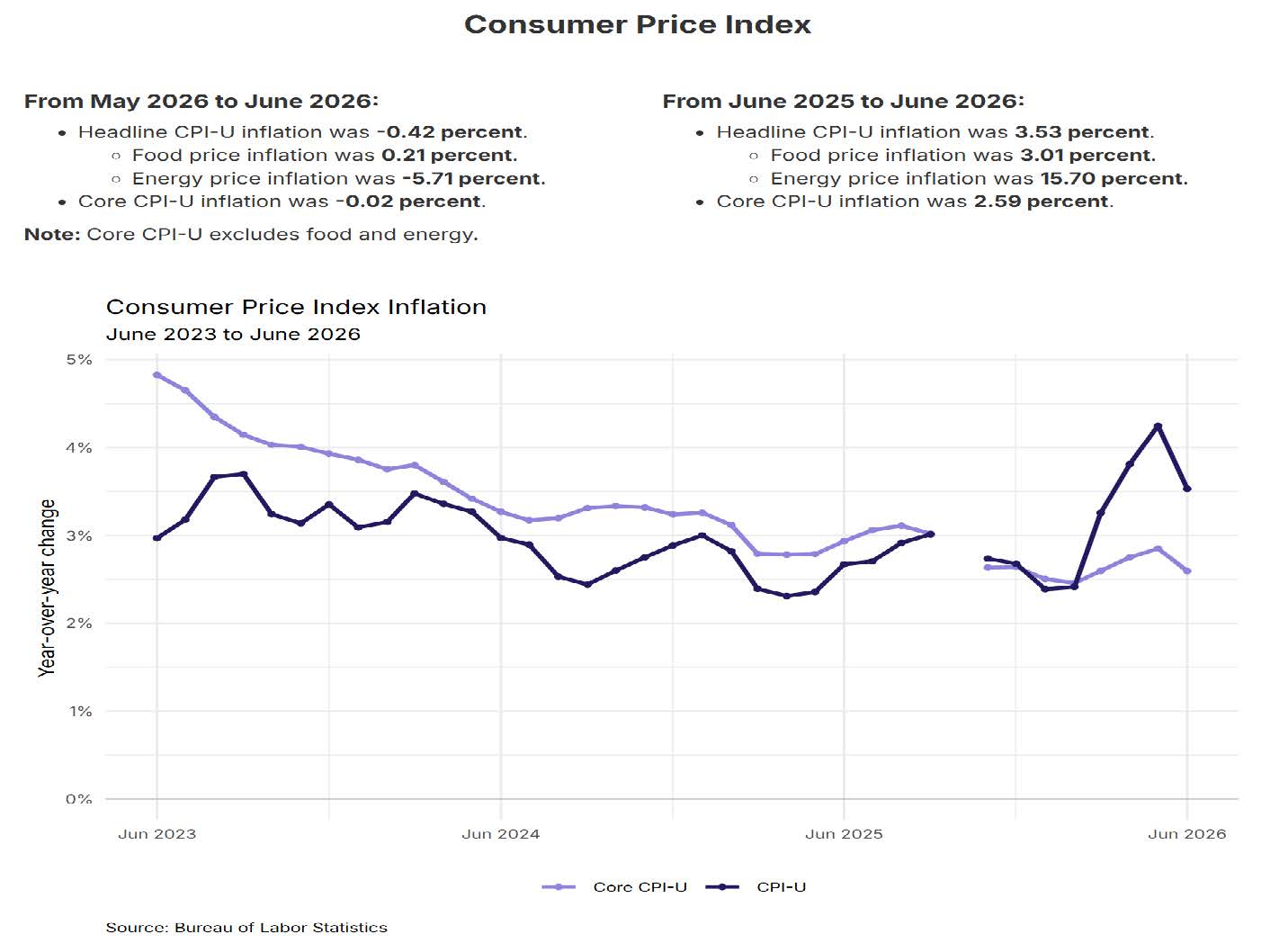
Inflation remains the central macroeconomic issue for households and investors, and recent Federal Reserve commentary suggests policymakers are still concerned that price pressures could persist longer than previously expected. While headline inflation has eased from its earlier peaks, underlying measures have been more stubborn, particularly energy and food as shown on the following chart. The Fed held its benchmark rate steady at its June meeting and has signaled that it is prepared to keep policy restrictive until it is confident that inflation is on a sustainable path back toward its target. For families, this “higher for longer” backdrop has several implications. Cash and short-term fixed income now offer yields that were unavailable just a few years ago, which can be attractive for emergency reserves and short-horizon goals. At the same time, elevated borrowing costs mean that decisions around mortgages, home equity lines, and other forms of debt require careful consideration. The CPI-U (which excludes food and energy) showed a sharp decline in June. Hopefully this index will continue to decline or at least stabilize. The continuing war with Iran adds a layer of difficulty in trying to contain inflation. A CPI report one month may be drastically different the next as shown on the following chart.
3. Retirement and education-planning rule changes
There have been several important changes in retirement planning regulations that are worth noting. Contribution limits for 2026, affecting how much individuals can save in 401(k), 403(b), and IRA accounts, have increased. Our recent blog on Roth IRAs contains useful information for your consideration; https://awealthplan.com/roth-ira-strategies/. In addition, changes tied to recent legislation have begun to flow through to employer plans, including new options for automatic enrollment, matching contributions on certain student loan payments, and expanded catch-up opportunities for employees over the age of 50. On the education side, federal student loan programs and repayment options are evolving again around mid-2026, with new income-driven repayment structures and modifications to borrowing limits and the availability of certain graduate financing options. For families, these changes create both complexity and opportunity. Higher contribution limits can help accelerate tax-advantaged saving for retirement, while new plan features may allow workers to balance student loan obligations with long-term investing.
Looking Ahead
Against a backdrop of ongoing uncertainty, our focus remains on your long-term financial plan. Rather than trying to predict each economic data point or policy announcement, we continue to emphasize diversification, appropriate risk levels and periodic rebalancing. This approach is designed to help you stay on track through a variety of environments including high and low inflation and strong and weak job markets.
If you have questions about how current economic conditions or policy changes may affect your personal situation, or if your goals or circumstances have changed, please contact the office to schedule a review. Finally, we encourage you to compare this SWP performance report to your quarterly statements from the custodians. If anything has changed regarding your risk tolerance or liquidity requirements, please let us know right away.
Sincerely,
The Strategic Wealth Planning Team